
What to say before a meal in Korean
맛있게 드세요, 잘 먹겠습니다 and a simple thank you: learn what to say when serving a meal, receiving one or eating in a restaurant.
Before a meal, the person serving the food and the person receiving it can say different things in Korean. Rather than learning one translation of “enjoy your meal”, start with a situation.
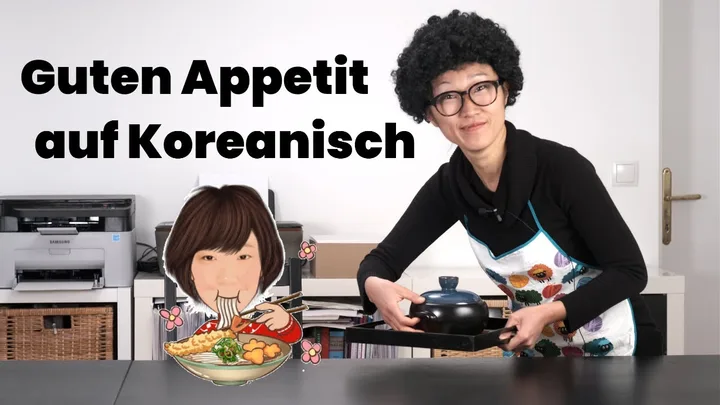
At the table
Imagine someone has prepared a meal for you. As they serve it, the exchange in the lesson goes like this:
- Host: 맛있게 드세요! Enjoy your meal.
- Guest: 잘 먹겠습니다. Thank you for the meal. Literally, “I will eat well”.
The host invites the guest to enjoy the food. The guest acknowledges the meal with gratitude.
맛있게 드세요: enjoy your meal
맛있게 expresses the idea of eating with enjoyment, and 드세요 uses a respectful form of “eat”. Together they make the host’s wish:
맛있게 드세요!
Enjoy your meal.
You may also hear:
많이 드세요!
Please have plenty to eat. Literally, “eat a lot”.
These expressions are directed towards the person who is going to eat.
잘 먹겠습니다: the guest’s response
잘 means “well”. 먹겠습니다 expresses “I will eat” in this phrase.
잘 먹겠습니다.
The literal meaning is “I will eat well”. In this situation, it shows appreciation for the food and the person who prepared it. It is not the same role as the host’s 맛있게 드세요.
In a restaurant
When a server brings your food and says 맛있게 드세요, a simple thank you is the response taught in this lesson:
- Server: 맛있게 드세요! Enjoy your meal.
- Guest: 감사합니다. Thank you.
고맙습니다 is another way to say thank you. You can also respond with 네, 고맙습니다, “yes, thank you”.
Keep the situation in mind rather than treating one phrase as the reply to every meal. Receiving food from a host and thanking a restaurant server are different moments.
Practise the exchange
Picture yourself serving a meal, then receiving one as a guest. Which part of the exchange would you say? Learn the words with the situation so that you remember who is speaking.
If you would like to explore the table customs around these phrases, read our article on Korean table manners.