
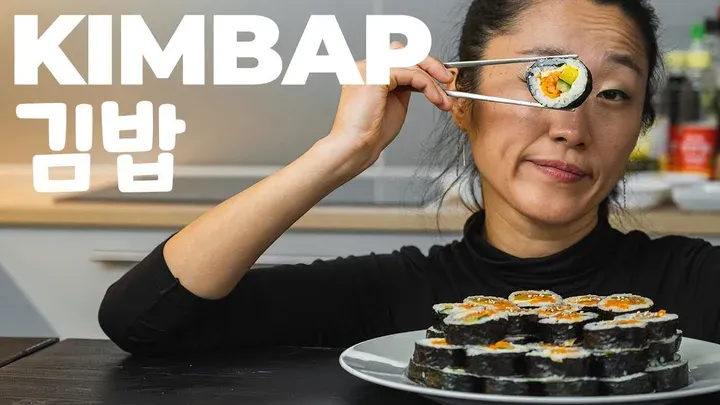
 Video
Gimbap with vegetables and egg
Rice, vegetables and omelette in seaweed sheets: this is how I make Gimbap with cucumber, plenty of carrots and yellow pickled radish. I also show you other fillings, for example with tuna, Bulgogi or kimchi.
Korean food, and the words for it. The recipes, their dishes and their ingredients are in English; the rest of the dish and ingredient collection is in German.
Cook with Hyunok
Ingredients and preparation, step by step, with Hyunok’s recipe videos.
VideoRice, vegetables and omelette in seaweed sheets: this is how I make Gimbap with cucumber, plenty of carrots and yellow pickled radish. I also show you other fillings, for example with tuna, Bulgogi or kimchi.
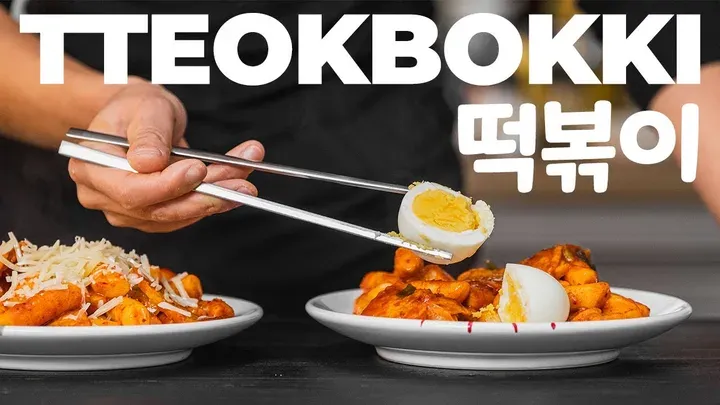 Video
Round rice cakes in a sweet and spicy sauce of Gochujang and Gochugaru. I show you the basic recipe and what you can add: fish cake, egg, cheese, vegetables or ramen noodles.
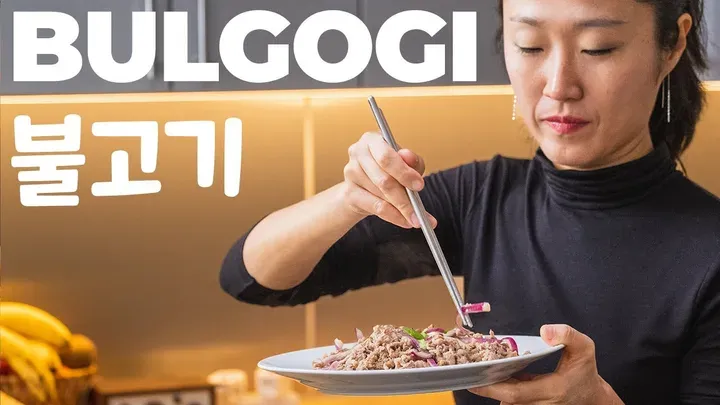 Video
Thinly sliced beef in a marinade of soy sauce, apple, pear and garlic. I use no sugar: the sweetness comes from the fruit.
Dishes
Korean dishes carry their kind in the name: Baechu-jeon is a Jeon, Kimchi-jjigae is a Jjigae. Pick a kind to see its dishes.
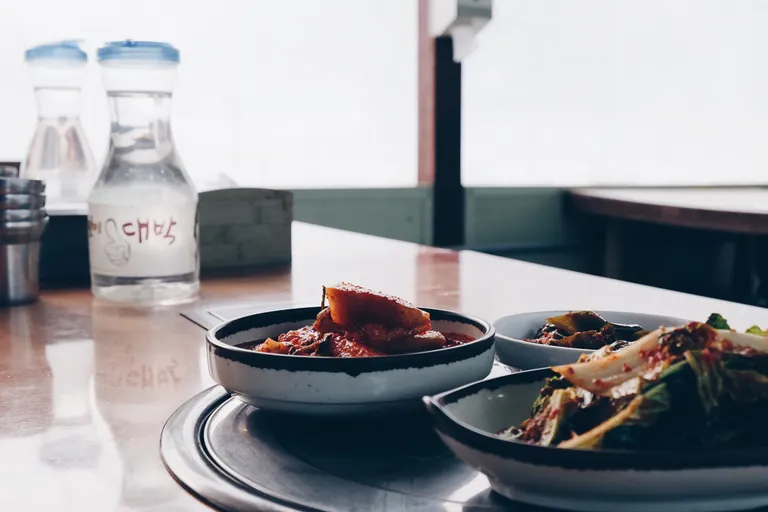
In this article, I want to talk about Korean breakfast and what we think about it these days.
Cooking Korean food
Explore dishes and ingredients with their Korean names. Where we have a recipe for a dish, you can find it on that dish’s page.
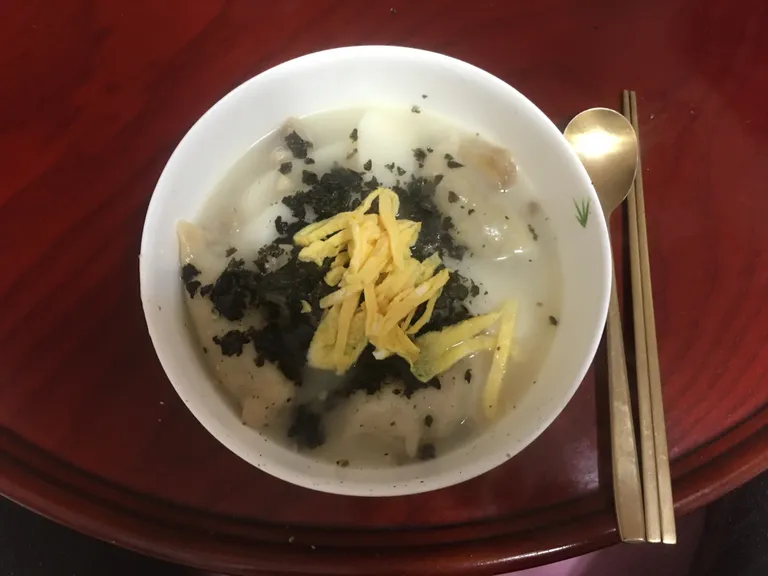
떡국
Tteokguk (떡국) is the New Year dish in Korea. At Seollal (설날, Lunar New Year) every Korean family eats this soup with oval slices of rice cake. The shape of the rice cakes (떡) recalls coins and stands for prosperity in the new year.
떡볶이
Tteokbokki (떡볶이) is the king of Korean street food: chewy, round rice cakes in a sweet and spicy Gochujang sauce (고추장). 떡 (tteok) means rice cake, 볶이 (bokki) comes from frying. Tteokbokki is not a main meal but a snack.

오징어볶음
Ojingeo-bokkeum (오징어볶음) is spicy stir-fried squid and one of the most popular everyday dishes in Korean cooking. The name explains itself: 오징어 (ojingeo) means squid, 볶음 (bokkeum) means something stir-fried.
고추장
Gochujang (고추장) is the fermented chilli paste that Korean cooking can hardly do without. It is made from red chilli powder, glutinous rice, fermented soybeans and salt and often matures for months in clay pots. The result is a paste that tastes hot, sweet and deeply umami at the same time.
고춧가루
Gochugaru (고춧가루) are Korean chilli flakes made from sun-dried Korean chillies without seeds. The result is not simply chilli powder but something of its own: bright red, moderately hot, with a slightly sweet and smoky taste. Without gochugaru there is no kimchi.
계란
Gyeran (계란) or dalgyal (달걀) is the egg, and both words are in use: gyeran is Sino-Korean, dalgyal is the native Korean word. In Korean cooking the egg is rarely the main thing and almost always the layer on top: as the paper-thin egg sheet jidan, as strips on a soup or as a fried egg on bibimbap.
On YouTube
Learn Korean with Hyunok Jang on our English YouTube channel. Start with Hangul and work through the lessons at your own pace.