
Two ways to say I do not know in Korean
Use 몰라요 when you do not know, and 글쎄요 when you are unsure. See the difference in short Korean conversations.
Sometimes someone asks a question and you do not have an answer. Korean gives you a direct way to say “I do not know”, and another expression for “well, I am not sure”. Let us look at both.
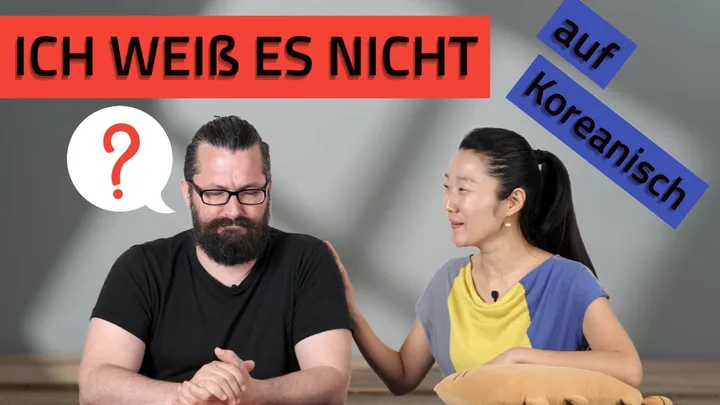
몰라요: I do not know
몰라요 comes from 모르다, “not to know”. It is a polite form you can use when you do not know the answer.
- 게르하드 씨, 지금 서윤 씨가 뭐 해요? Gerhard, what is Seoyun doing now?
- 몰라요. I do not know.
모르다 is an irregular verb. You do not need to understand the whole irregular pattern before using 몰라요 in a conversation. For the wider teaching sequence, read our approach.
If you also learn through German, the German playlist on irregular verbs and adjectives explains these patterns. This lesson covers 르:

글쎄요: well, I am not sure
글쎄요 adds hesitation or uncertainty. It is closer to “well…” or “I am not sure” than a direct statement that you do not know.
- 김밥을 언제 만들어요? When are you making gimbap?
- 글쎄요. Well, I am not sure.
You might be thinking about the answer or be unable to give a definite one at that moment.
Using the two together
You can combine them:
글쎄요, 몰라요.
Well, I do not know.
In the original lesson, the question is whether a learner will eventually speak Korean well. The answer begins with uncertainty, 글쎄요, then says 몰라요. It is an example of how the expressions can work together, not a prediction about your progress.
Which one should you use?
Start with 몰라요 for a direct “I do not know”. When you want to express uncertainty or pause before an answer, listen for how 글쎄요 is used. The more conversations you hear, the more familiar the difference becomes.