Four ways to say see you in Korean
다음에 또 봐요, 이따가 봐요, 조만간 봐요 and 그때 봐요: choose a Korean goodbye for next time, later today, soon or an agreed meeting.
다음에 또 봐요. See you next time.
You may recognise this sentence from the end of Hyunok’s videos. What do the separate words mean, and how do you change it to “see you later” or “see you then”? Start with the time you have in mind.
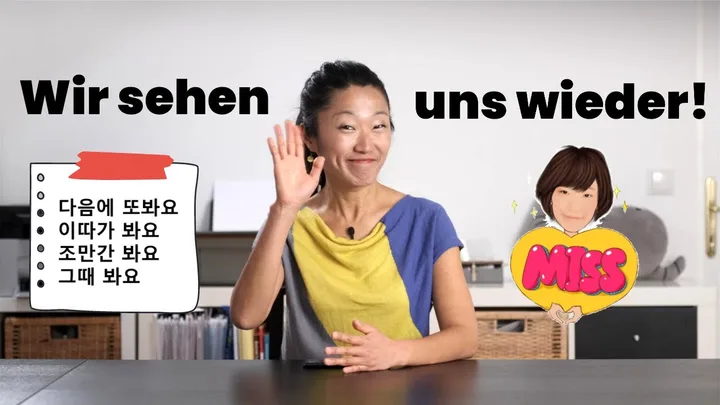
다음에 또 봐요: see you next time
The phrase has three parts:
- 다음에: next time
- 또: again
- 봐요: see
Together, 다음에 또 봐요 means “see you again next time”. It works as a goodbye when you expect another meeting, such as the next lesson.
이따가 봐요: see you later
Use 이따가 봐요 or the shorter 이따 봐요 when you plan to see someone again later that day. It might be in ten minutes or a few hours. It is not the expression for tomorrow or another day.
- 이따가 or 이따: later
- 봐요: see
For example, you meet a friend for lunch and expect to see them again that evening. 이따가 봐요 fits that goodbye. If the exact time matters, agree it separately; the expression itself does not specify an hour.
조만간 봐요: see you soon
조만간 봐요 is useful when you expect to meet again soon but have not settled exactly when. It keeps the next meeting open, rather than pointing to a particular time later today.
그때 봐요: see you then
When a meeting time has already been agreed, use 그때 봐요. 그때 refers back to that time.
- 그: that
- 때: time or moment
Here is the conversation from the lesson:
- H: 서윤 씨, 토요일에 시간이 있어요? Seoyun, are you free on Saturday?
- S: 네, 있어요. 왜요? Yes, I am. Why?
- H: 그럼, 토요일에 봐요. Then see you on Saturday.
- S: 네, 그때 봐요. Yes, see you then.
For more about 그, the German lesson on 이, 그 and 저 explains these words in more detail.
More respectful versions
Instead of 봐요, you can use 뵈어요 or its shortened form 봬요 for a more respectful expression:
- 다음에 뵈어요. / 다음에 봬요. See you next time.
- 이따가 뵈어요. / 이따가 봬요. See you later.
- 조만간 뵈어요. / 조만간 봬요. See you soon.
- 그때 뵈어요. / 그때 봬요. See you then.
The time expression stays the same; the form of “see” changes. Choose the level that fits your relationship with the person.
For a goodbye at bedtime, read how to say good night. 다음에 또 봐요!