
Dish with recipe
Gimbap
In Korean김밥
Gimbap with vegetables and egg
Rice, vegetables and omelette in seaweed sheets: this is how I make Gimbap with cucumber, plenty of carrots and yellow pickled radish. I also show you other fillings, for example with tuna, Bulgogi or kimchi.
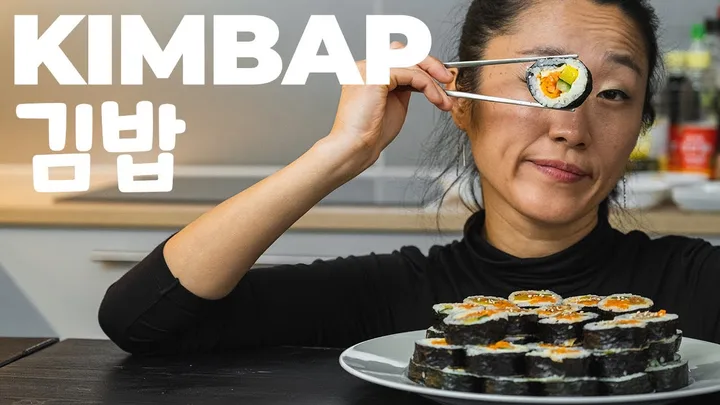
The video is in German.
About the dish
Gimbap (김밥) are Korean rice rolls in a sheet of seaweed and the most popular food to take along in Korea. The name is made of 김 (gim, roasted seaweed) and 밥 (bap, rice). Gimbap is not sushi: the rice is seasoned with sesame oil (참기름), without vinegar and sugar.
Some people also add salt to the rice. We also eat Gimbap without soy sauce.
The roll is filled with egg, Danmuji (단무지, yellow pickled radish), carrots, spinach and surimi, for example, but the variations are endless. The roll is cut into slices. We do not bite pieces off Gimbap. We always eat one whole piece at a time, so you have all the ingredients in your mouth together.
Gimbap is the Korean picnic food, from school trips to hiking days. Convenience stores sell triangle Gimbap (삼각김밥) as a quick snack.
밥 (bap) is one of the first and most important words when you learn Korean: it means rice and also simply a meal.
At a glance
- Part of the meal
- Snack between meals (Gansik 간식), Main dish
- Kind of dish
- Rice dishes (Bap 밥)
- Prep
- 40 min
- Cook
- 30 min
- Total
- 1 hr 10 min
- Yield
- 5 rolls
- Difficulty
- Medium
- Allergens
- Egg, Sesame
The recipe
Method
Prepare the rice and the fillings
Cook the rice first. Wash it and soak it for at least ten minutes. Then cook it with enough water in a rice cooker or in a pot. That takes about half an hour. Use this time to prepare the fillings.
Cut the cucumber first, because it has to stand in salt. Cut it lengthways and remove the inside, which holds too much liquid. Cut the firm part into long strips, mix them with a teaspoon of salt and leave them while you prepare the other ingredients. Then wash the cucumber well and squeeze it out thoroughly, so that your Gimbap does not turn soggy.
Peel the carrots and cut them lengthways as finely as you can. Fry them in a tablespoon of oil until they are very soft. Cut the yellow radish into long strips. One strip goes into each roll.
Beat the eggs with a teaspoon of salt and fry them into an omelette with a little oil. The pan should not be too hot, or you will not be able to turn the omelette properly. If it breaks, that does not matter: you cut it into strips afterwards anyway.
Mix about one tablespoon of sesame oil into the cooked rice. Do not use too much, or the rice will no longer stick properly and will be hard to roll. I do not add extra salt to the rice, because I have already put enough salt into the fillings.
Roll and cut
Lay a seaweed sheet down with the shiny side facing down. Spread a thin layer of rice over the rough side and leave about 2.5 cm free at the top.
Lay carrots, cucumber, one strip of radish and omelette in a straight line on the lower third of the rice. Leave about 2.5 cm of rice free at the bottom and do not overfill the roll.
Roll the sheet up tightly and shape the roll with your fingers as you go. You can use a bamboo mat, but you do not need one. I roll without a mat. It is faster, but it takes some practice.
Cut the roll into bite-sized pieces. Make the other rolls the same way and sprinkle them with sesame seeds if you like.
About the recipe
Good to know when you cook
For Gimbap you need rice that sticks. Sushi rice is best. If you cannot get it, use short-grain rice from the supermarket. Long-grain rice does not work. I show you how to cook the rice without a rice cooker under Bap. The yellow pickled radish has to come from an Asian shop.
The recipe lists two carrots. I actually use many more. With more carrots, Gimbap tastes even better.
The amounts make about five rolls. How much filling fits depends on how thinly you spread the rice.
The cooking video on this page is in German.
More fillings to try
- Spinach instead of cucumber: Boil the spinach briefly in salted water. Then squeeze it out well with your hands, so that as little water as possible is left in it. Season it with a little salt and a little sesame oil.
- Tuna: Tinned tuna works very well. Drain it completely so that your Gimbap does not turn soggy. You can add a little mayonnaise, but not too much.
- Ham: You can also add ham in long strips. I think tuna is better, though.
- Cheese: Add some thinly sliced cheese.
- Bulgogi: Add fried Bulgogi. Use a little less of the other fillings then, so that you can still close the roll.
- Kimchi: Chop the kimchi small and fry it over high heat before it goes into the roll. Otherwise it holds too much liquid.
- Vegan: Leave out the egg and use avocado instead.
These fillings also change the allergens. The list above applies to the basic recipe.
On YouTube
Rather watch than read?
Learn Korean with Hyunok Jang on our English YouTube channel. Start with Hangul and work through the lessons at your own pace.