
Four Korean terms of endearment: how to say sweetheart in Korean
Learn 당신, 여보, 자기 and 자기야, the name endings 아 and 야, and 오빠 and 누나: which terms of endearment Korean couples use, and how relationship, age and situation decide the right one.
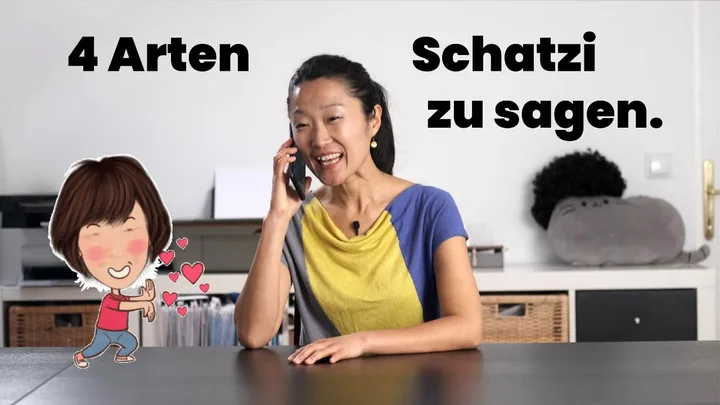
Korean has several terms of endearment, and which one fits depends on the relationship, the age of the two people and the situation. These names are more than sweet words. They show you how Korean thinks about closeness, age and respect. In this lesson I go through the most common ones and when to use them.
당신 (Dangsin) and 여보 (Yeobo)
Married couples traditionally address each other as 당신 or 여보. Both sound old-fashioned today, and you hear them mostly from older couples.
In the lesson on Korean personal pronouns, I explained that 당신 is formally the polite pronoun for “you” in the singular. Even so, addressing someone directly as 당신 would be rude in many situations. Korean tends to avoid pointing at the other person with a pronoun at all, and this is one of the places where you notice it.
Between spouses, 당신 has one more use: it comes out in heated arguments. In the video (German) you can hear what that sounds like.
- Meaning: both words are used by married couples to address their partner.
- Usage: old-fashioned, and mainly older married couples use them. Calling someone 당신 outside a close relationship would be impolite.
- Cultural nuance: do not confuse 여보 with 여보세요, which is “hello” on the phone.
자기 (Jagi)
If 당신 and 여보 are old-fashioned, what do younger couples say? For younger couples, married or not, 자기 is the usual choice. Used this way, it comes closest to “sweetheart” or “honey”, and it signals an intimate, loving relationship between two people.
자기 also has a second meaning in Korean: “oneself”. One way to remember the term of endearment is to think of it as treating your partner as part of yourself.
- Meaning: 자기 can mean “sweetheart” and also “oneself”.
- Usage: younger couples, married or unmarried, address each other as 자기.
야 (Ya) and 아 (A)
Korean also has endings that attach to a name or a form of address and change its tone. 아 and 야 are two of them. They make the name warmer and signal a close relationship.
Which one you use depends on the last syllable of the name. If it ends in a consonant (a batchim, 받침), add 아. If there is no batchim, add 야.
Batchim: 서윤 + 아 = 서윤아
No batchim: 지수 + 야 = 지수야
아 and 야 belong to banmal, the informal speech level. Use them only where the relationship is close: friends of the same age, younger people you know well, children, or animals.
The same ending also attaches to 자기. Since 자기 has no batchim, it takes 야, and the result is 자기야, a term of endearment you often hear between couples.
자기 + 야 = 자기야
- Meaning: these endings turn a name or form of address into an informal, affectionate one.
- Usage: attached to names or forms of address, as in 서윤아 or 지수야. Used to call children, friends of the same age, younger people you know well, or animals.
오빠 (Oppa) and 누나 (Noona)
You have probably heard 오빠 and 누나 many times. Literally, 오빠 is “older brother” from a woman’s point of view: a woman uses 오빠 when she talks about or to her older brother. 누나 is “older sister” from a man’s point of view, so a man calls his older sister 누나.
Both words reach beyond the family. In a relationship, the younger partner often calls the older one 오빠 or 누나, much like “sweetheart”. This is especially common among unmarried couples, but young married couples use it too to express affection and closeness.
The same words also work in friendships. A younger woman may call an older male friend 오빠, and a younger man may call an older female friend 누나. This shows two things at once: the respect given to older people in Korean culture, and closeness even without a family bond.
- Meaning: 오빠 means “older brother” from a woman’s perspective, and 누나 means “older sister” from a man’s perspective.
- Usage: beyond the literal meaning, couples use these words for the older partner. They are especially popular among unmarried couples, but young married couples use them as well.
Summary: terms of endearment and forms of address
In this lesson we looked at Korean terms of endearment: the traditional 당신 and 여보, the affectionate endings 아 and 야, and the familiar 오빠 and 누나.
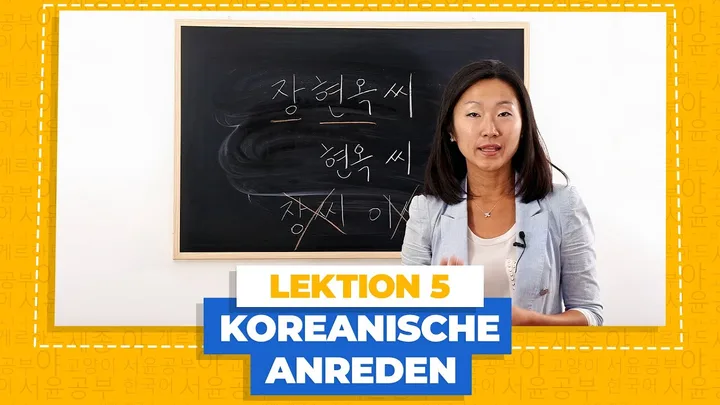
To really understand Korean forms of address, I recommend reading our article on forms of address and watching the video on forms of address (German) from the “Korean for beginners” playlist.